Tuesday, January 28, 2025

Billie Eilish’s Not My Responsibility: A Callout of Society’s Double Standards

  Billie Eilish’s Not My Responsibility is more than just a song. It’s a powerful micdrop aimed at society and the media’s obsession with women’s bodies. Eilish puts the spotlight on the exhausting and often contradictory expectations placed on women with raw vulnerability, challenging us to rethink why we’re so quick to judge others. The song feels deeply personal yet also universal, making space for something countless women face every day: the impossible task of living up to everyone’s standards.

Eilish lays it all out clearly, stating “if I wear what is comfortable, I am not a woman. If I shed the layers, I’m a slut” (Eilish, 2020). These lines hit hard, exposing the impossible double standard women are stuck with: damned if we do, damned if we don’t. It’s a clear critique of the patriarchal systems that base women’s value on their appearance. This isn’t just a problem Billie faces. This a problem infused in society and reinforced through everything from Instagram highlights to the way the media obsesses with what celebrities are wearing. 

What makes this piece so powerful is the way Eilish directly addresses those that are doing the judging by asking pointed questions. “Do you know me? Really know me?... Would you like me to be smaller, weaker, softer?... Do my shoulders provoke you? Does my chest?... The body I was born with, is it not what you wanted?” (Eilish, 2020). SHe forces listeners to confront their own complicity and place in this system. Take a listen. It may make you uncomfortable, but that’s the point. That’s what feminist perspectives are all about: “[focusing] on the taken-for-granted as "normal" roles and rules for men and women in society” (Sellnow, 2010, p. 139) and asking why they exist in the first place. 

Eilish’s message in this song aligns perfectly with radical feminist perspectives, “[revealing] how objectifying hegemonic beliefs and behaviors based on sex, gender, or sexual orientation are reinforced or challenged in some way” (Sellnow, 2010, p. 145). The patriarchal system we live in didn’t just happen by accident–it’s reinforced every time we reduce a woman’s worth to her looks or judge her for stepping outside of the box. Not my Responsibility is EIlish’s way of saying “Enough.”

At its core, this song asks an important question: why do we let other people define our value? It’s a question worth answering, whether you’re the one doing the judging, being judged, or both. Eilish doesn’t offer the answer, but she does start the conversation. Maybe the first step toward breaking free from expectations is asking, “Is my value based only on your perception? Or is your opinion of me not my responsibility?” (Eilish, 2020).


References: 

Eilish, B. (2020). Not my responsibility [Song]. On Happier Than Ever. Darkroom/Interscope Records. 

Sellnow, D. (2010). The rhetorical power of popular culture: Considering mediated texts. (pp. 139-168). Sage. 


Friday, January 10, 2025

The Influence of Pop Culture Marketing: The Disneyfication of Nostalgia

Pop culture is more than just entertainment- it's a system of everyday objects, events, and actions that shape how we think and act (Sellnow, 2010). Nostalgia is one of its most powerful tools, and companies like Disney expertly use it to drive profits. By tapping into beloved childhood memories, Disney encourages consumers to revisit familiar stories while subtly reinforcing ideas about the past. This "Disneyfication" of nostalgia shows just how pervasive and persuasive pop culture can be.

Disney’s marketing highlights how mediated pop culture influences us on many levels. Consider the live-action remakes of The Lion King (Favreau, 2019) and Beauty and the Beast (Condon, 2017). These films closely resemble their animated originals, but with updated elements designed to capture modern audiences. This approach creates a rhetorical
illusion of realism and intimacy, making viewers feel a stronger emotional connection. According to parasocial interaction theory, these perceived bonds with characters foster trust and familiarity (Sellnow, 2010). However, this emotional pull often prioritizes profit over creativity, as many remakes merely recycle old narratives rather than offer fresh reinterpretations.


Nostalgia-driven marketing has ethical implications because it shapes how we remember history. While pop culture feeds and preserves collective memory, it also presents sanitized versions of the past. Take Disney’s portrayal of princesses: newer films attempt to challenge outdated gender roles, but nostalgic marketing often highlights more traditional representations. As a result, symbolic meanings tied to these characters remain rooted in earlier, (sometimes problematic) cultural values. By repeatedly presenting these images, Disney reinforces accepted ideas about gender norms, possibly subtly influencing what society views as “normal” or “ideal.”

Nostalgia is more than just a feel-good trip down memory lane—it’s a site of cultural power. Disney’s dominant role in nostalgic media reflects its privileged position in defining “family-friendly” entertainment and shaping societal norms. Yet this power often goes unquestioned, perpetuating cycles of familiar narratives and values without critical engagement from the audience (us).

So, how do we become more mindful consumers of nostalgia-saturated media? Media literacy helps us question the messages we absorb. For instance, how do Disney’s remakes uphold or challenge traditional power dynamics? Are they reflections of genuine progress, or are they commodified versions of the past? If pop culture mirrors and molds society, recognizing its influence allows us to choose which beliefs to accept or challenge.

As nostalgia remains a dominant force in pop culture marketing, we must think critically about its impact. What fresh, innovative stories could emerge from breaking this cycle of recycled storytelling? How might this reflect a broader range of voices and experiences? Grappling with these questions empowers us to navigate the world of pop culture with greater awareness.


References: 

Favreau, J. (Director). (2019). The Lion King [Film]. Walt Disney Pictures.

Condon, B. (Director). (2017). Beauty and the Beast [Film]. Walt Disney Pictures.

Sellnow, D. (2010). The rhetorical power of popular culture: Considering mediated texts (pp. 1-25). Sage.


Friday, January 13, 2023

The True Crime Pop Culture Phenomenon

I want to start this post by pointing out that I absolutely love true crime and spend hours each week consuming books, news, and documentaries about crime.

True crime has been popular for decades, but in the last 5-10 years, the genre has absolutely exploded. Even if we are not seeking out true crime stories, they tend to make their way into popular media, especially in podcasts, film, and television. My interest in true crime has mostly been focused on the mystery and exploring the motives behind certain crimes. Some true crime fans' obsession with certain cases can be harmful to victims and their loved ones, so how do we find a balance between telling tasteful and respectful true crime stories and exploitation? 

One of my favorite true crime documentaries is the 2020 Netflix film called 'American Murder: The Family Next Door'. A documentary about the murder of Shanann Watts, her unborn son, and her two young daughters by her husband. The story is told almost exclusively through live footage, including police bodycam and interrogation footage. It is incredibly eerie and surreal watching and listening to the footage. After watching this, I really started to think about how to ethically consume true crime. Even though true crime is created to inform, it is ultimately meant to entertain, so I am essentially getting entertainment from someone else's tragedy. 


(Police bodycam footage from the day Shanann and the girls disappeared, featured in the Netflix documentary)

Recently, a dramatized version of Jeffrey Dahmer's crimes was released on Netflix. The series, 'Dahmer', was extremely popular and audiences loved it, but a family member of one of his victims came out in protest against the series, stating that it was just opening back up old wounds. Others criticized the series and others like it by pointing out that it 'festishizes' and even sexualizes serial killers. 

(Evan Peters as Jeffrey Dahmer in Netflix's Dahmer – Monster: The Jeffrey Dahmer Story, 2022)

However, I also just recently watched a docuseries called 'Vatican Girl: The Disappearance of Emanuela Orlandi', a case I had never heard of before the series was released. Not only does the series cover a truly puzzling crime, but it highlights the rampant sexual abuse that was/is happening in the Catholic church. I think that this series is a great example of how true crime can not only inform and entertain, but help open up new investigations and shed light on ongoing crimes. 

(Image of Emanuela Orlandi alongside her missing person poster)

I have heard that many true crime fans, particularly women, consume true crime as a subconscious effort to learn more about crime and victimization in the effort of protection and safety. However, heavy consumption of this type of media also spreads fear, skews our perception, and reinforces stereotypes. 

What do you think about the morality of true crime and its explosion in popularity? Is it harmful to victims and victims' loved ones? Do you think it skews our perception about the prevalence of crime? Do you think it's just a passing fad?


Thursday, January 12, 2023

Dancing to the Beat of Popular Culture: How Dance Evolves with the Times

 Dance has been an integral part of human culture for centuries, and it continues to evolve and adapt to the changing times. From traditional folk dances to contemporary hip-hop and everything in between, dance has played a prominent role in popular culture. The evolution of dance styles, dance moves and prominence in every day life can mirror key aspects about our society’s characteristics.

One of the most iconic examples of dance in popular culture is the rise of rock and roll in the 1950s. The music and accompanying dance moves of Elvis Presley and other rock and roll legends captivated audiences and helped to break down racial barriers. At a time when racial injustice was exploding onto the scene, the music and dance moves of the time seem to reflect the explosive and unprecedented nature of the discussion topics sweeping the nation and the world. The twist, the jive, and the cha-cha were just a few of the dance craze that swept through the country, inspiring countless imitators and becoming ingrained in popular culture. As the decades passed, dance continued to evolve with the times. The 1960s saw the rise of the Twist, and the 70s brought us Disco. The 80s was the era of the Breakdancing and Electric Boogie, while the 90s was the age of Hip-Hop. Each decade brought its own unique style of dance that reflected the cultural and societal changes of the time. 

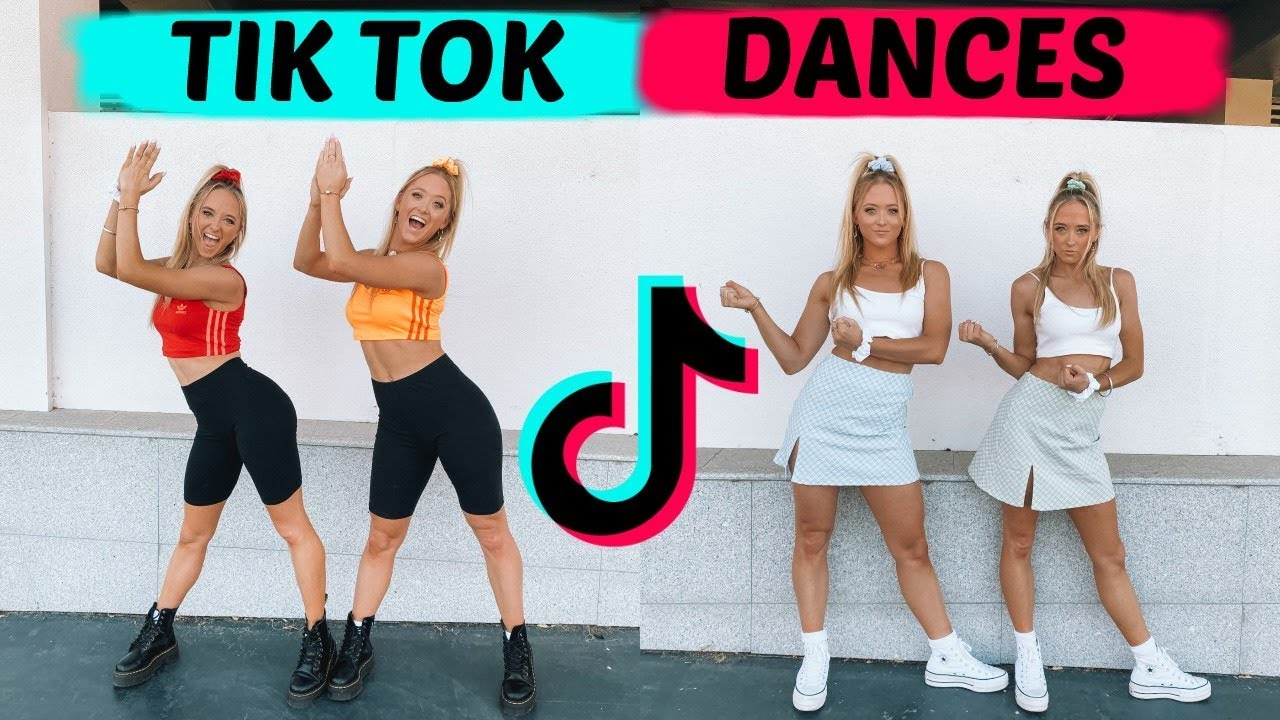
In recent years, popular culture has been heavily influenced by the rise of social media and streaming platforms. Most recently, this has become especially prominent on the social media platform TikTok. The internet has made it easier than ever for dancers to share their work and connect with fans from all over the world. This has led to the emergence of a new generation of dancers and choreographers who are pushing the boundaries of what is possible with their bodies. Not only this, but major dance trends sweep the country with many teenagers, young adults, and even older generations getting in on the fun by mimicking, recreating, and adding their own twists to the trend. The global connectivity of the internet has connected cultures and people that have never before been able to interact in such an immersive way. The sharing of these cultures and practices adds to the trends and dances we see rocketing around the world on social media platforms. This reflects an increase in creativity, acceptance, and connection among our cultures across the world creating a global network of popular culture. 

Overall, dance has been and will continue to be an integral part of popular culture. From the rock and roll of the 1950s to the TikTok dances of today, dance has always been a reflection of the times and a powerful tool for self-expression. With the rise of social media and streaming platforms, the world of dance is more accessible than ever, and the possibilities are endless. As long as there is music, there will be dance, and the way it evolves and adapts to the times will continue to fascinate and inspire people all around the world. What aspects of dance in popular culture get your feet moving?